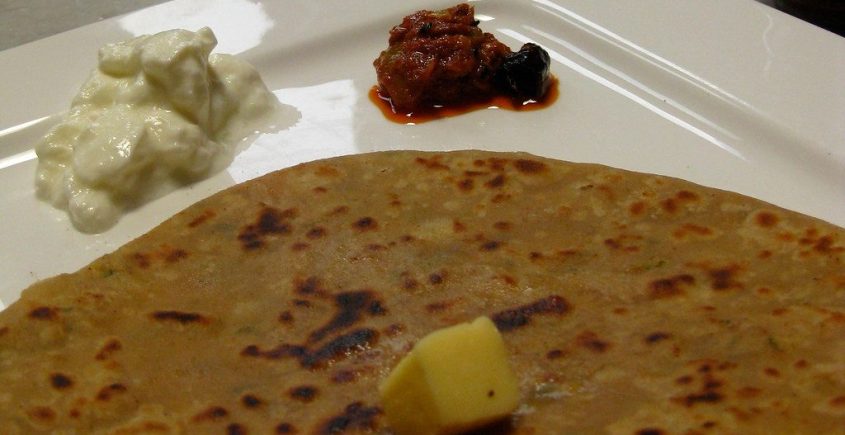

Aloo paratha is the weekend breakfast of Punjab: a whole wheat flatbread stuffed with spiced mashed potato, cooked on a hot tawa with ghee until crisp and golden in spots. Served with yoghurt, mint chutney, pickle and a cup of tea, it keeps you full until lunch.
Many people find parathas tricky because the filling bursts out. Two things help: a soft, well-rested dough, and a filling that is completely cool and dry. Follow the steps below and you will get even, thin parathas without tears.
The filling is wet or lumpy, or the dough is too stiff. Mash the potatoes smoothly, use them cold, and keep the dough soft and rested.
You can mix half plain flour with half whole wheat for a softer paratha, but traditional aloo paratha uses only atta.
Wrap them in a clean kitchen towel as they come off the tawa, then in foil. The steam keeps them soft.
Photo: Aloo Parathas by mojosaurus, CC BY 2.0, via Flickr
Mix the flour, salt and oil, then add water a little at a time and knead for 5 minutes into a soft, smooth dough. Cover and rest for 30 minutes.
Grate or mash the cold potatoes so there are no lumps. Mix in all the filling ingredients. Taste and adjust the salt. Divide into 6 balls.
Divide the dough into 6 balls slightly smaller than the filling balls. Roll one dough ball into a 4 inch circle.
Put a filling ball in the centre and bring the edges of the dough up around it, pinching them together at the top. Twist off any extra dough and press the ball flat.
Dust with flour and roll gently into a 7 inch circle, turning it often. If a little filling peeks out, cover it with a pinch of flour and keep going.
Heat a tawa or heavy frying pan on medium-high. Cook the paratha for 1 minute until small bubbles appear, flip, and cook the other side for 1 minute.
Spread 1 tsp ghee on top, flip, and press the edges with a spatula. Add ghee to the second side, flip again, and cook until both sides are golden with brown spots.
Serve hot with yoghurt, chutney, pickle or a pat of butter.
Boil the potatoes in their skins and let them cool completely; they absorb less water and the filling stays dry.
Add the onion just before stuffing. Salt draws water out of onions, which makes the filling wet.
Keep the dough soft. A stiff dough tears when you roll it.
Cooked parathas freeze well. Stack them with baking paper between each one and reheat on a hot tawa.
Rubina Shaukat is a professional chef who teaches cooking at a government technical college in Pakistan. She manages IngRecipe, sharing recipes and practical guides to ingredients and kitchen basics for home cooks. She also runs the Home Ingrecipe kitchen in Multan.
Read More